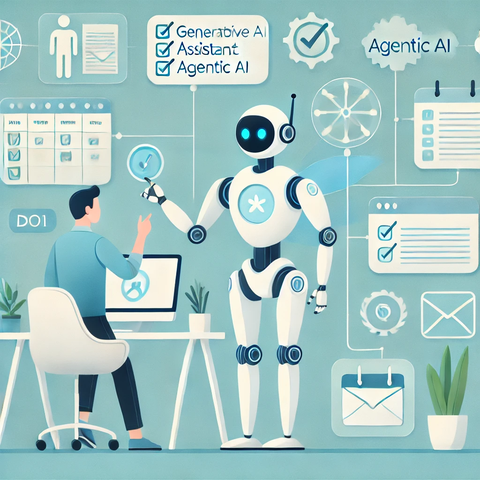
Artificial Intelligence is evolving quickly, and two terms you may hear more and more are Generative AI and Agentic AI. They sound similar, but they describe very different kinds of systems.
This article explains both in plain language, using everyday examples, and shows how Agentic AI is already being used in simple, practical ways, without hype or technical jargon.
What Is Generative AI?
Generative AI is a technology that creates new content.
That content might be:
- Text (emails, blog posts, summaries)
- Images
- Music
- Code
- Videos
Generative AI learns patterns from large amounts of data and uses those patterns to produce something new.
A Simple Analogy
Think of Generative AI like a very advanced autocomplete.
When you start typing a sentence, your phone guesses the next word. Generative AI does the same thing, but instead of one word, it can generate an entire paragraph, image, or idea.
Everyday Examples
- You ask it to write a birthday message → it writes one
- You ask for a recipe → it creates one
- You ask for an image → it generates a brand-new picture
Key idea: Generative AI creates content, but it waits for you to ask.
What Generative AI Is Not
To keep expectations realistic:
- It does not think like a human
- It does not understand meaning the way people do
- It does not act on its own
It responds, but it doesn’t take initiative.
What Is Agentic AI?
Agentic AI goes a step further.
Instead of only generating content, Agentic AI can work toward a goal. It can plan, take actions, check results, and adjust what it does next.
A Simple Analogy
If Generative AI is like a writer, then Agentic AI is like a personal assistant.
- The writer answers questions.
- The assistant figures out what needs to be done and works through it.
Everyday Example
You say:
“Help me plan a weekend trip.”
- Generative AI gives suggestions.
- Agentic AI:
- Breaks the task into steps
- Checks options
- Creates a plan
- Adjusts if something changes
Key idea: Agentic AI doesn’t just respond, it acts toward a goal.
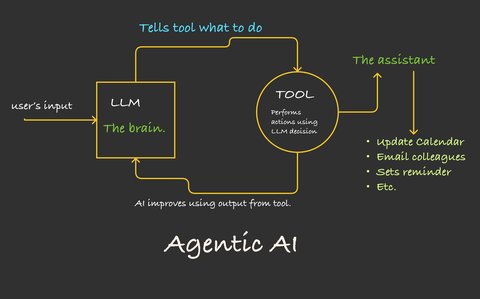
How Generative AI and Agentic AI Work Together
Most Agentic AI systems use Generative AI as their thinking engine.
Think of it like this:
- Generative AI → the brain (language, reasoning, creativity)
- Agentic AI → the assistant (planning, acting, following up)
Together, they create systems that feel more helpful and proactive.
Simple, Everyday Use Cases for Agentic AI
Agentic AI shines in tasks that:
- Have a goal
- Require multiple steps
- Need follow-up
Below are simple, realistic use cases.
Case 1: AI Task Assistant (Project Management)
You say:
“Help me plan a website launch.”
The agent:
- Breaks the goal into tasks
- Prioritizes them
- Suggests timelines
- Checks progress later
- Reminds you what’s overdue
Analogy:
A project manager who turns vague ideas into clear to-do lists and follows up.
Case 2: AI Meeting Follow-Up Assistant
You provide:
- Meeting notes or a transcript
The agent:
- Extracts action items
- Assigns owners and deadlines
- Sends reminders
- Follows up automatically
Analogy:
That person in meetings who always says:
“So… who’s doing what by when?”
Case 3: AI Market Watch Agent (Trading / Crypto)
You tell it:
“Alert me if Bitcoin drops more than 5% in a day.”
The agent:
- Monitors prices continuously
- Detects unusual movement
- Checks market context
- Sends a clear alert
Analogy:
A friend watching the market for you and texting when something important happens.
Note: This agent informs and explains, it does not trade for you.
A Very Simple Example: What Agentic AI Looks Like in Code
You don’t need to know programming to understand this.
This example shows the idea, not production software.
goal = "Plan a product launch"

while not goal_completed:
    plan = ai_think(goal)
    action = choose_next_action(plan)
    result = perform_action(action)
    observe(result)
What This Means in Plain English
- The AI is given a goal
- It thinks about the next step
- It takes an action
- It checks what happened
- It keeps going until finished
Analogy:
Telling an assistant:
“Keep working on this. If something doesn’t work, adjust. Stop when you’re done.”
Why Oversight Still Matters
Agentic AI can feel powerful, but it’s still software.
That’s why responsible systems include:
- Clear limits
- Human approval for important actions
- Transparency about what the AI is doing
AI assists. Humans remain responsible.
Why This Distinction Matters
Understanding the difference helps you:
- Choose the right tools
- Avoid unrealistic expectations
- Use AI safely and effectively
Generative AI helps us create faster.
Agentic AI helps us get things done.
Final Thoughts
We are moving from AI that talks to AI that can act, within limits set by people.
The future isn’t about replacing humans.
It’s about building better assistants that reduce busywork and amplify human judgment.
Understanding Generative AI and Agentic AI is the first step toward using both wisely.
Further Reading & Sources
If you’d like to explore these ideas further, the following resources provide credible, beginner-friendly explanations and practical examples of Generative AI and Agentic AI in action.
Generative AI Foundations
OpenAI – Introduction to Generative Models
A clear overview of how generative models create text, images, and other content.
Useful for understanding the “creative” side of AI.
https://openai.com/research
https://platform.openai.com/docs/introduction
Google AI Blog – Large Language Models Explained
Explains how large language models learn patterns in language and generate text.
Helpful for readers curious about how AI “writes.”
https://ai.googleblog.com/
https://blog.google/technology/ai/large-language-models/
Agentic AI & AI Agents
NVIDIA – Building a Simple AI Agent with Qwen3 (GitHub Notebook)
A practical, step-by-step example showing how to build a goal-driven AI agent that reasons, takes actions, and completes tasks.
This notebook inspired the Agentic AI examples discussed in this article.
https://github.com/NVIDIA/GenerativeAIExamples
https://github.com/NVIDIA/GenerativeAIExamples/blob/main/oss_tutorials/Building_a_Simple_AI_Agent_with_Qwen3_Next_powered_by_NVIDIA_NIM.ipynb
Microsoft Research – AI Agents and Tool Use
Explains how AI systems can plan tasks, call tools, and work through multi-step objectives.
Useful for understanding how agents move beyond chatbots.
https://www.microsoft.com/en-us/research/
https://www.microsoft.com/en-us/research/blog/
This article draws on public research, documentation, and practical demonstrations from organizations including NVIDIA, OpenAI, Google, Microsoft, IBM, OECD, and DeepLearning.AI.